Roof Repairs
Repairs from Gosford to Toukley, where corrosion near the lakes and the ocean, and storm damage, cause most failures.
Learn more →Colorbond and metal roofing across the Central Coast, specified by distance from surf or sheltered water. Free written quote. Call (02) 4307 5050.
Most conversations about Colorbond start with the colour chart. On the Central Coast they should start with a tape measure, because the single biggest determinant of how long a metal roof lasts here is how far it sits from water and what kind of water that is.
Call (02) 4307 5050 and we will come and work out which band your house falls in before anyone talks about Monument versus Woodland Grey.
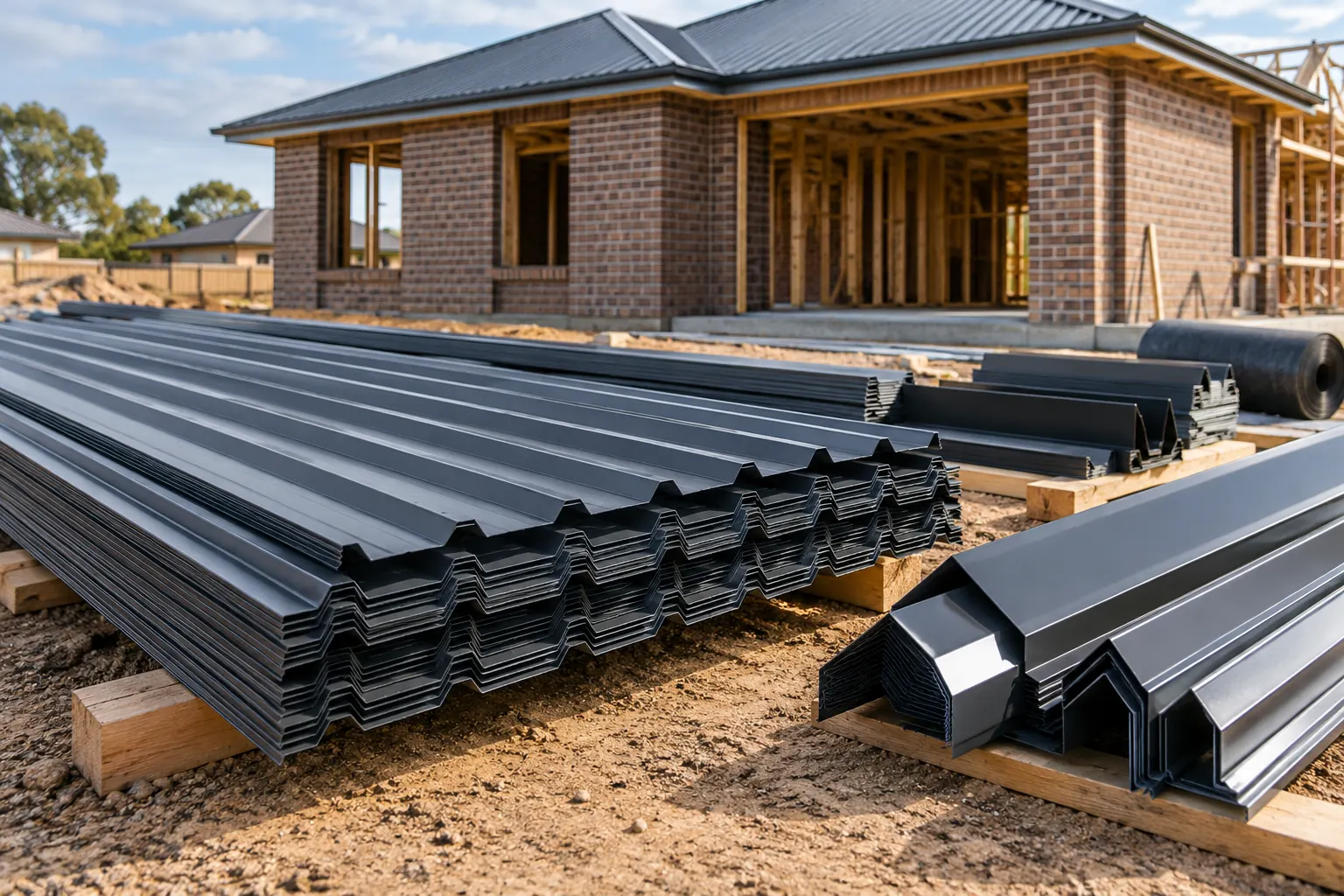
BlueScope publishes selection guidance for marine environments and it reads differently depending on which stretch of the Coast you are on.
| Exposure | Roughly | Typical Central Coast examples |
|---|---|---|
| Very severe marine | Within about 100 m of breaking surf — stainless territory | Beachfront rows at Shelly Beach, Copacabana, Avoca Beach, Killcare |
| Severe marine | About 100–200 m from breaking surf — COLORBOND Ultra | Much of Terrigal, Avoca Beach, Umina Beach, The Entrance |
| Marine | Beyond about 200 m from surf | Erina, Bateau Bay back streets, Kincumber, Green Point |
| Calm marine water | Separate thresholds measured from sheltered water | Long Jetty, Berkeley Vale, Toukley, Woy Woy, Davistown, Saratoga, Hardys Bay |
| No marine influence | Bushland hinterland | Ourimbah, Lisarow, Narara, Niagara Park, Wyoming, West Gosford |
The calm marine row is the one worth dwelling on. A sheltered lake or estuary frontage is not a mild version of the beachfront — it is its own category, with its own distances, because the failure mechanism differs. Surf exposure delivers more salt but also more rain-washing. Sheltered water delivers less salt but almost no washing, in warm humid air, onto surfaces that stay damp. We see roofs a few hundred metres from Tuggerah Lake in worse shape than roofs in sight of the breakers.
On a coastal metal roof, the sheets are rarely the first thing to fail. The fixings are.
That is the whole reason this is a specification job rather than a materials job.
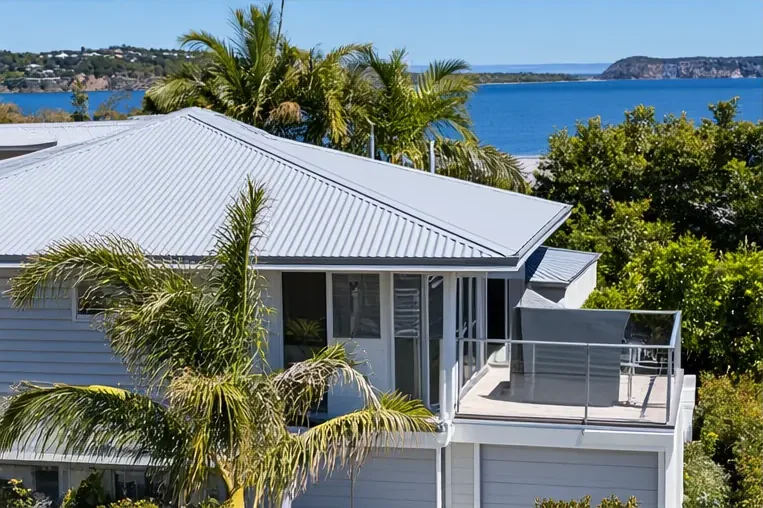
The original beach shacks around Woy Woy, Umina Beach, Ettalong Beach, Toukley and Budgewoi were built light. Many were never framed for the weight of tile. When one of those houses gets a new roof, metal is usually the straightforward answer — lighter on the frame, better at low pitches, and far less to go wrong on a long shallow run.
Where the existing sheeting is asbestos cement, the removal is a separate regulated step: no pressure cleaning, no dry cutting, and in NSW a licensed removalist for anything over 10 square metres of non-friable material or for any friable material. Central Coast Council accepts it at the Buttonderry facility at Jilliby and at Woy Woy, by booking, for material generated within the LGA.
At Ourimbah, Lisarow, Narara and the steeper parts of Killcare, leaf load is the daily problem. Metal sheds leaves far better than tile, and a continuous sheet run has fewer places for debris to lodge than a tiled valley does. Corrosion is not the issue up there — water volume and blockage are.
Plenty of Central Coast houses have a 1970s or 80s skillion addition at the back sitting below the minimum pitch for tile. Those are metal jobs by necessity, and getting the minimum pitch, lap and flashing detail right is what stops them leaking.
Corrugated remains the default for houses — familiar, forgiving on curves, and the cheapest to replace a sheet of later. Trapezoidal and standing-seam style profiles handle longer spans and lower pitches and suit contemporary rebuilds on the waterfront. We will recommend based on pitch, span, exposure and what the house already looks like, not on what is easiest to order.
Lighter colours reflect more solar heat, which matters on a west-facing roof at Wyong or Tuggerah with no shade. Darker colours look sharper on a rebuilt waterfront home and show salt staining less. Neither choice changes the corrosion grade you need. We will give you an opinion when asked, but the colour is yours.
The drivers: roof area and pitch, the grade required by your exposure band, profile, complexity (hips, valleys, penetrations, skylights), access for delivery and scaffold, removal and disposal of the old covering, and whether gutters go on at the same time. Corrosion-rated hardware costs more than inland hardware, and on a house near water it is the thing that makes the rest of the spend worthwhile.
Free inspection, written itemised quote, workmanship warranty on completion. Work is carried out by established, licensed and insured roofing contractors working to NSW Fair Trading requirements.
Call (02) 4307 5050 or send the details through the quote form.
Related: full roof replacement if the whole roof is going, gutter repair and replacement to match the hardware grade at the gutter line, and the service areas page for the suburbs we cover.
Repairs from Gosford to Toukley, where corrosion near the lakes and the ocean, and storm damage, cause most failures.
Learn more →Re-roofing Central Coast homes: fibro beach shacks, 1980s brick and lakeside rebuilds, each specified for its own exposure.
Learn more →Tile restoration across the Coast, rebedding and repointing ridges that salt-laden air has broken down.
Learn more →Gutter replacement in corrosion-rated material across the Coast, plus leaf guard for hinterland properties at Ourimbah and Lisarow.
Learn more →Storm response across the Central Coast after east-coast lows, including make-safe on holiday and rental properties.
Learn more →Roof inspections and written reports across the Central Coast, including absentee-owner and pre-purchase inspections.
Learn more →It depends on the measured distance to breaking surf, not on the suburb name. BlueScope puts roofing within roughly 100 metres of breaking surf in its most severe band and nominates stainless steel there. From about 100 to 200 metres, COLORBOND Ultra is the recommended grade. Beyond around 200 metres, standard COLORBOND is back on the table. Two houses in the same street can land in different bands, which is why we measure rather than assume.
They have their own thresholds, which is the part people miss. The selection tables list calm marine water as a separate column from breaking surf, with its own distances, because the mechanism is different: humid, sheltered, slow-drying conditions let salt sit on the metal rather than being washed off. Around Tuggerah Lake, Budgewoi Lake and Brisbane Water we specify on that basis, and we pay particular attention to unwashed areas under eaves and behind parapets.
Not as a shortcut. Tiles have to come off so the battens, trusses and any water-damaged timber can be seen and dealt with, and so the new battens can be set out for the sheet profile and pitch. Overlaying also traps moisture and adds weight the frame was never designed for. The one thing in your favour is that metal is far lighter than tile, so a frame that carried a tile roof will carry a metal one comfortably.
Both are largely a build-up question rather than a material question. Sarking plus insulation blanket under the sheets takes most of the drumming out, and the difference between a bare deck and a properly insulated one is substantial. For heat, lighter colours reflect more, and ventilation through the roof space matters as much as the colour does. We will talk through the build-up when we quote rather than leaving it to chance.
No, and this trips people up. BlueScope advises that stainless fasteners are not recommended for use with COLORBOND or COLORBOND Ultra steel, because of the dissimilar-metal reaction. The right answer inside the marine bands is a fastener class matched to the sheeting and the exposure, which in practice means AS 3566 Class 4 rather than Class 3 within 400 metres of the ocean or other severe marine influence.
Tell us what you need and we'll get straight back to you. Prefer to talk? Call (02) 4307 5050 and speak to someone local.
Call (02) 4307 5050