Roof Repairs
Repairs from Gosford to Toukley, where corrosion near the lakes and the ocean, and storm damage, cause most failures.
Learn more →Make-safe and permanent storm damage repairs across the Central Coast, with photographs and a written report for your insurer. Call (02) 4307 5050.
After a serious blow, two things are true at once: the roof needs to stop letting water in today, and the proper repair needs daylight, dry conditions and a full look at what actually failed. Doing them in that order is the whole job.
Call (02) 4307 5050. Active leaks and anything structurally unsafe get priority.
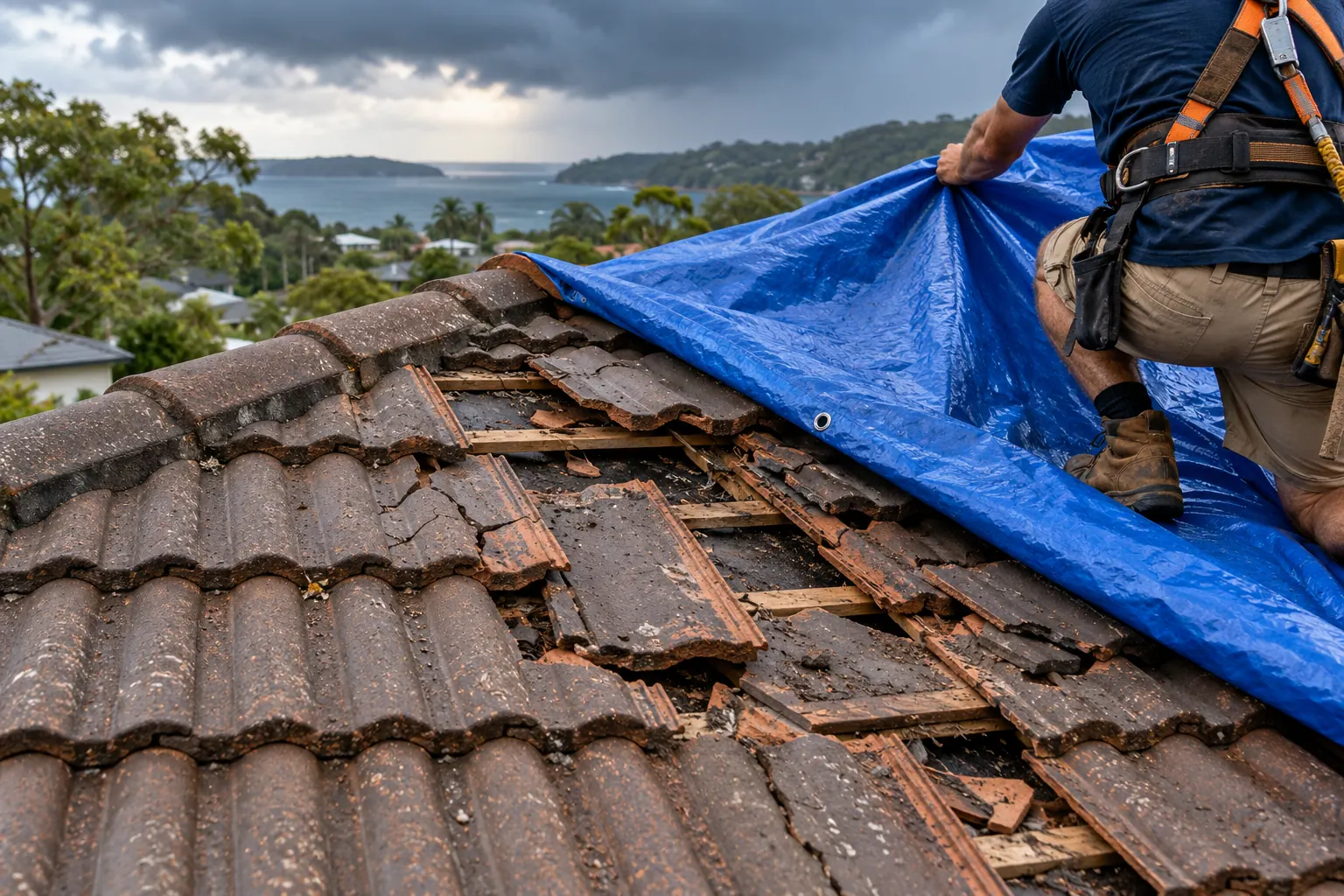
The Central Coast sits squarely in the path of east-coast lows, and the pattern is reliably nasty for roofs even when no single storm makes the news: sustained strong wind from an unusual direction, heavy rain arriving faster than gutters can clear it, and often the two together for a day or more.
What that combination finds:
Wind-driven rain also finds its way through joints that handle vertical rain perfectly well. A roof that has never leaked can leak in a southerly and then be dry for three years afterwards.
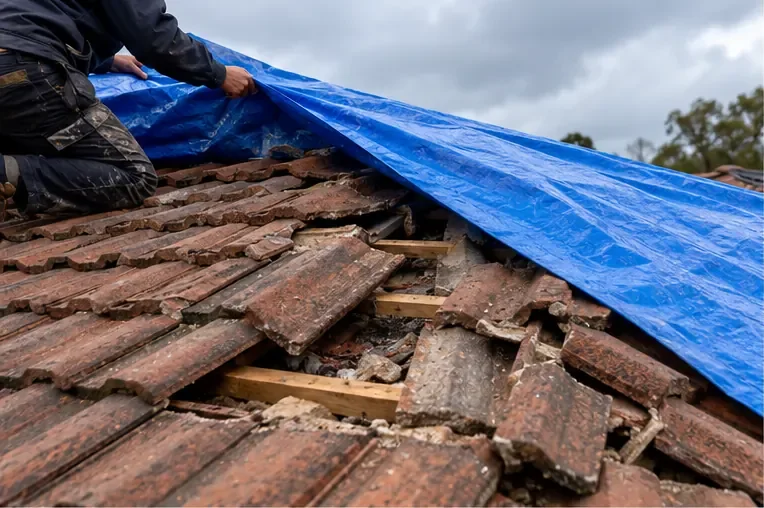
We give you the documentation an insurer needs and we give it to you quickly, because claims are easier when the evidence is contemporaneous.
What you get: dated photographs of the damage and the make-safe, a written description of the failure mechanism, an itemised repair quote, and a clear separation between emergency make-safe costs and permanent repair costs, which most policies treat differently.
What we will not do: tell you your claim will be approved, advise you on your policy, or inflate a quote to suit a claim. Whether damage is covered depends on your policy wording and your insurer, and anyone telling you otherwise before the assessor has looked is guessing.
One practical note: many policies distinguish sudden storm damage from gradual deterioration and lack of maintenance. A gutter that overflowed because it was full of gum leaves is frequently assessed differently to a tile lifted by wind. We describe what we actually find either way.
A very large share of the roofs on this Coast belong to people who are somewhere else — holiday houses at Killcare, Hardys Bay, Copacabana and Pearl Beach, rentals across Woy Woy, Ettalong Beach, Toukley and Budgewoi, and homes kept in families for decades.
For a storm, that changes everything. There is nobody to hear water hitting the ceiling, and the first sign is often a smell, a stain or a sagging cornice discovered weeks later by a cleaner between bookings. The repair bill at that point includes plaster, insulation, paint and sometimes flooring, none of which would have been needed if someone had looked in the first week.
We attend for owners and agents on exactly that basis: inspect after the event, photograph, report in writing, make safe if required, and quote the permanent repair. You approve by email. No one needs to drive up the M1 to point at a roof.
Most storm damage we attend had a pre-existing weakness. The pointing was already crumbling. The screws were already corroded. The valley was already full.
(02) 4307 5050 — or send the details through the form if the roof is holding and you want it looked at this week.
For the suburbs we cover, see the service areas page.
Repairs from Gosford to Toukley, where corrosion near the lakes and the ocean, and storm damage, cause most failures.
Learn more →Re-roofing Central Coast homes: fibro beach shacks, 1980s brick and lakeside rebuilds, each specified for its own exposure.
Learn more →Colorbond roofing across the Central Coast, with COLORBOND Ultra where ocean or lake exposure warrants it.
Learn more →Tile restoration across the Coast, rebedding and repointing ridges that salt-laden air has broken down.
Learn more →Gutter replacement in corrosion-rated material across the Coast, plus leaf guard for hinterland properties at Ourimbah and Lisarow.
Learn more →Roof inspections and written reports across the Central Coast, including absentee-owner and pre-purchase inspections.
Learn more →Move what you can out from under it, put a bucket down, and if the ceiling is bulging with trapped water, consider piercing it deliberately in one spot over a container rather than letting it come down in a sheet. Turn off power to any circuit near the water and do not go up on a wet roof yourself. Then ring us on (02) 4307 5050. Photograph the inside damage while it is fresh, because your insurer will want it.
Stopping further water entry and removing anything that could fall or blow away. In practice that means tarping over broken sections and fixing the tarp properly rather than weighting it with bricks, removing loose tiles and hanging flashing, clearing blocked valleys and downpipes so the roof can drain, and temporarily securing anything that has lifted. It is a holding measure. The permanent repair is quoted separately once we can see the full extent in daylight and dry conditions.
We document it thoroughly, which is the part that matters. You get dated photographs of the damage, a written description of what failed and how, the make-safe record and an itemised repair quote in a format insurers are used to receiving. What we will not do is promise an outcome or tell you a claim will be accepted, because that decision sits entirely with your insurer and your policy wording.
Yes, and that is a routine job on this Coast. We attend, inspect the roof and gutters, photograph what we find, and send you a written report whether or not there is anything to fix. If it needs making safe we do that first and tell you what we did. Owners who live in Sydney or further afield use it after every serious weather event rather than waiting for a tenant or neighbour to notice a stain.
Active water entry and anything unsafe go to the front of the queue, and we cover the whole LGA from Budgewoi down to the Bouddi Peninsula. After a widespread east-coast low every roofer on the Coast is fielding calls at once, so we prioritise by severity and tell you honestly when we expect to arrive rather than giving you a comforting number we cannot hold to.
Tell us what you need and we'll get straight back to you. Prefer to talk? Call (02) 4307 5050 and speak to someone local.
Call (02) 4307 5050