Roof Repairs
Repairs from Gosford to Toukley, where corrosion near the lakes and the ocean, and storm damage, cause most failures.
Learn more →Tile roof restoration on the Central Coast: clean, rebed, repoint and recoat. Free inspection and written quote. Call (02) 4307 5050.
A roof restoration is not a coat of paint on a failing roof. It is a staged process — clean the surface, replace what is broken, rebuild and reseal the ridge lines, then protect the result with a coating system. Done on a roof that is still structurally sound, it buys years and costs a fraction of a replacement. Done on a roof that is past it, it hides the problem for a season.
Our job at the inspection is to tell you which one yours is. Call (02) 4307 5050. The inspection and the written quote are free.
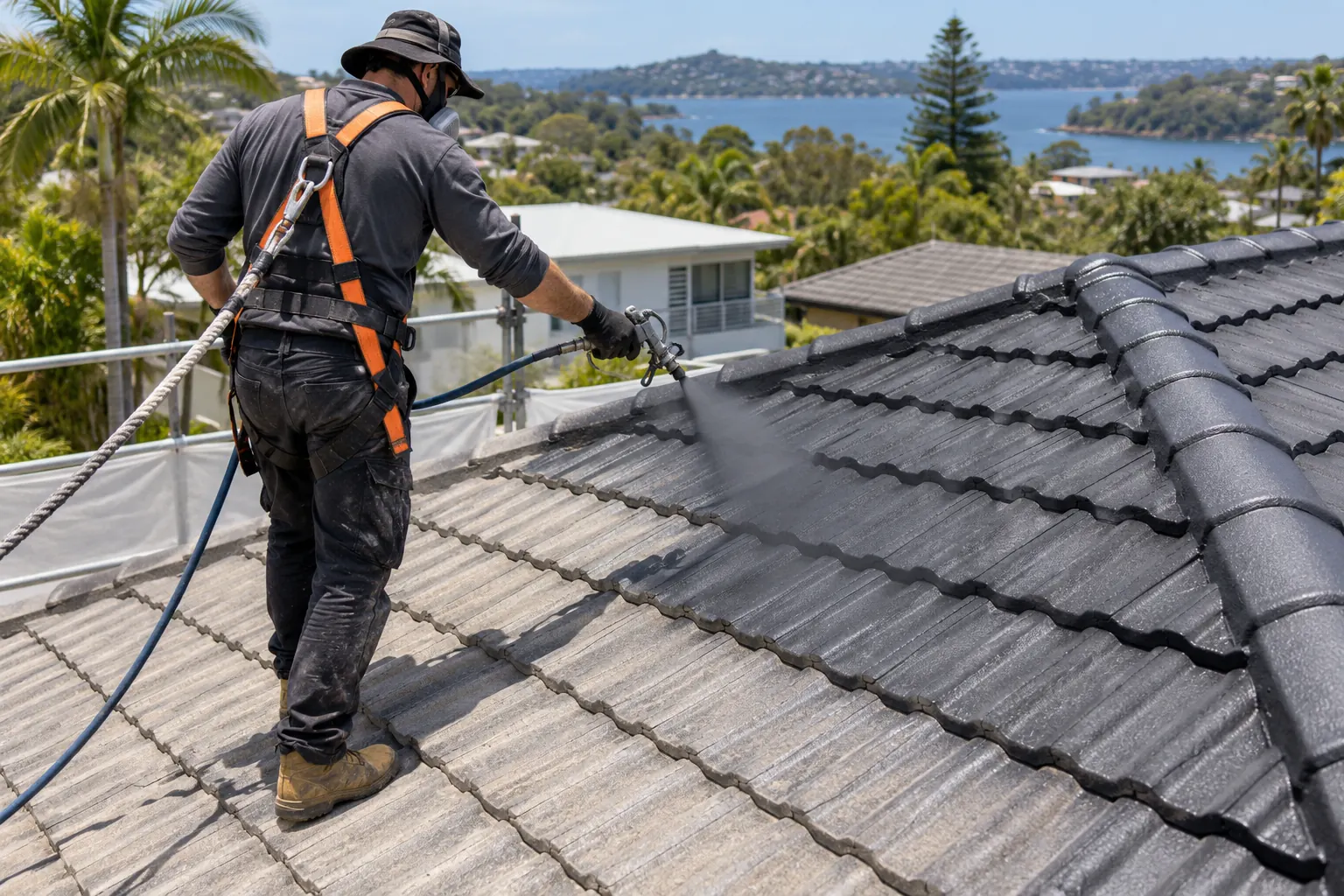
Restoration works when the tiles have life in them and the failures are at the surface and the ridge. Good signs:
Signs it is the wrong answer:
In those cases we will point you to roof replacement instead and explain why.
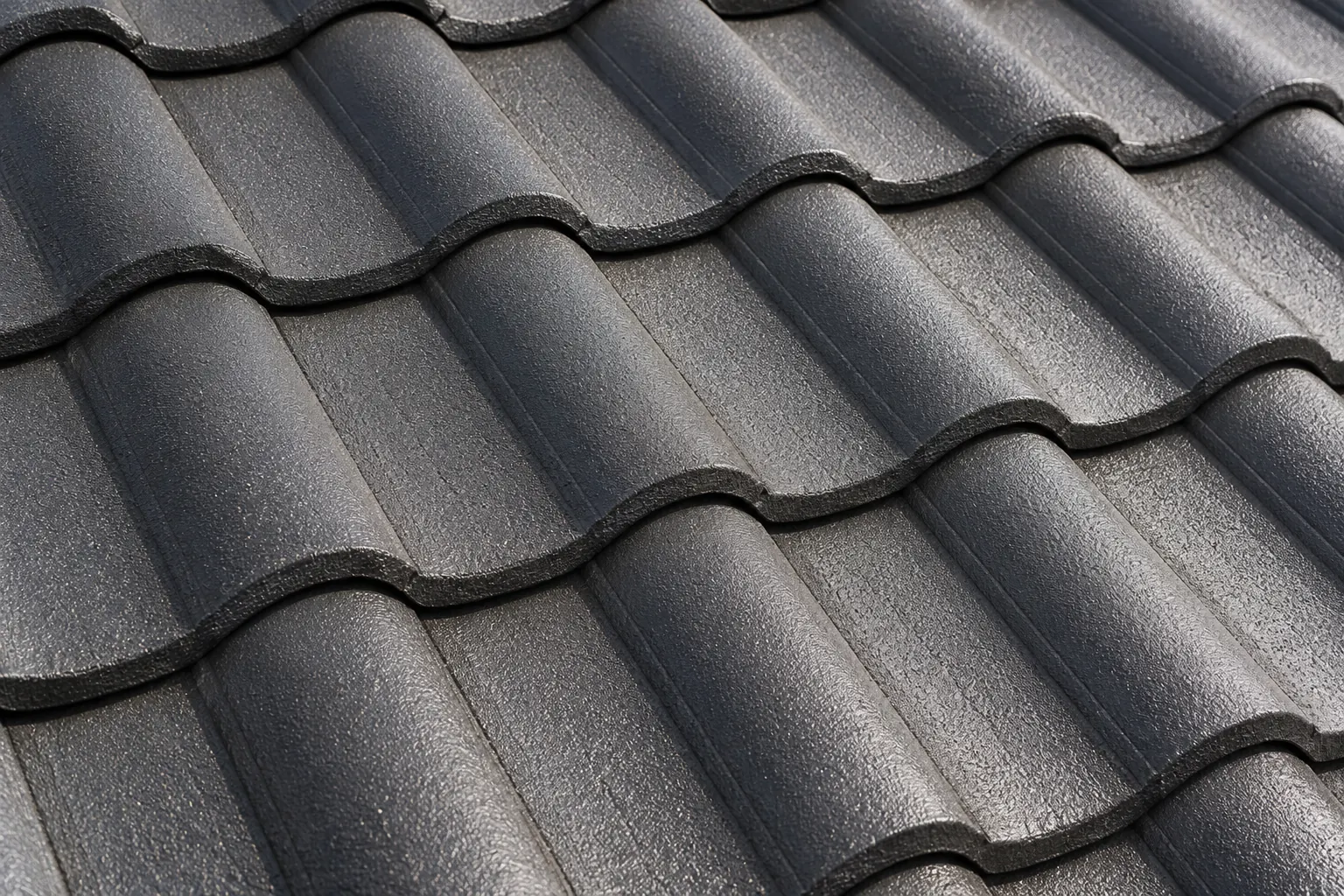
Across Ourimbah, Lisarow, Narara, Niagara Park, Wyoming and West Gosford, the issue is not salt — it is biology and debris. Mature eucalypts over a roof mean continuous leaf drop rather than an autumn event, and the shade they throw keeps roof faces damp enough for moss and lichen to grow year round.
Three consequences worth knowing:
Plenty of original housing on the Woy Woy peninsula, around Ettalong Beach, Toukley, Budgewoi and the older end of The Entrance dates from the asbestos-cement era. Asbestos cement roofing and eave sheeting must never be high-pressure cleaned, because the process drives fibres into the air and across the yard.
Nor can it be restored with a conventional clean-and-coat system. Where we find it, the conversation changes to assessment and, if removal is on the table, to the lawful route: a licensed removalist for anything over 10 square metres of non-friable material or for any friable material, and disposal at Central Coast Council's Buttonderry facility at Jilliby or the Woy Woy facility, booked ahead and only for material generated within the LGA. We identify it before quoting, not after starting.
Tiles are immune to salt corrosion. Everything metal around them is not.
On a restoration at Terrigal, Umina Beach, Saratoga or Long Jetty, the tile work is the straightforward half. The half that determines whether the roof actually stops leaking is the hardware: valley irons, flashings at every penetration, the fixings holding ridge caps and sheets, and the gutter line. Sheltered brackish frontages around Brisbane Water and the Tuggerah Lakes are especially hard on gutters, where salt-laden damp sits in the trough and is never washed away.
We check and price that metalwork as part of the restoration rather than discovering it halfway through.
Restoration is weather-dependent in a way repairs are not. Coating systems need dry surfaces and a window to cure, and the Coast is generous with sudden rain. We schedule around the forecast rather than against it, which occasionally means a day lost and a roof left safe and watertight overnight. A typical single-storey house is a small number of days on site, spread across whatever weather allows.
Roof area and pitch, the length of ridge and hip line to be rebedded and repointed, how many tiles need replacing, access and scaffold, the coating system chosen, and whether gutters and valleys are included. A compact single-storey house at Kincumber and a steep two-storey at Terrigal with three valleys are different numbers for the same words.
We quote after the inspection, in writing, itemised. Work is carried out by established, licensed and insured roofing contractors working to NSW Fair Trading requirements.
Call (02) 4307 5050 or send your details through the form.
See also roof repairs if a single fault is the problem, roof inspections and reports if you need it in writing for a buyer or an insurer, and the service areas page for the suburbs we work in.
Repairs from Gosford to Toukley, where corrosion near the lakes and the ocean, and storm damage, cause most failures.
Learn more →Re-roofing Central Coast homes: fibro beach shacks, 1980s brick and lakeside rebuilds, each specified for its own exposure.
Learn more →Colorbond roofing across the Central Coast, with COLORBOND Ultra where ocean or lake exposure warrants it.
Learn more →Gutter replacement in corrosion-rated material across the Coast, plus leaf guard for hinterland properties at Ourimbah and Lisarow.
Learn more →Storm response across the Central Coast after east-coast lows, including make-safe on holiday and rental properties.
Learn more →Roof inspections and written reports across the Central Coast, including absentee-owner and pre-purchase inspections.
Learn more →It is doing both. Moss and lichen hold moisture against the tile surface long after the rain stops, which accelerates surface breakdown and keeps the bedding damp. On a shaded bush block under established gums, growth is continuous rather than seasonal. The bigger risk is the debris that comes with it packing into valleys and gutters, because that is where the actual water entry starts.
When the problem is the tile rather than the surface. If tiles are delaminating, cracking under foot, or so porous they stay dark for days after rain, a coating is cosmetic. Same if battens have gone soft from long-term water entry, or if more than a small proportion of tiles are broken. We check all of that during the inspection and will say plainly if replacement is the better value, even though it is a bigger job than the one you called about.
Bedding is the mortar bed the ridge cap actually sits on. Pointing is the flexible compound applied over the join between the cap and the bedding to seal it. Repointing alone makes sense when the bedding underneath is still solid. If the bed has cracked or the cap moves when pushed, it has to be lifted and rebedded first, otherwise you are sealing a joint that is going to move again.
Yes, with a condition. The tiles themselves do not corrode, so restoring the surface and the ridge lines is sound work anywhere. But on a coastal or lakeside block the metal that goes with the tiles is usually the real problem — valley irons, flashings, fixings and gutters. We check those at the same time, because a beautifully recoated roof with a rusted-through valley is still going to leak.
Little, in practical terms. The work happens outside, access is from the ground and ladders, and nobody needs to be inside the house. For properties with a tenant we give notice of the days involved, and for holiday places we book between stays where that is possible. Photographs go to you at the start and the end so you can see what was done without being there.
Tell us what you need and we'll get straight back to you. Prefer to talk? Call (02) 4307 5050 and speak to someone local.
Call (02) 4307 5050